Christmas Around the World
James Matison, Daily Seal Student Writer
There are many different countries in the world, and many that celebrate the Christmas holiday. The United States of America, France, Spain, and Mexico just to name a few. There are five particular countries that will be talked about in this article. They are Spain, Italy, Poland, Mexico, and the United Kingdom. These countries are being mentioned because they have a high visitor rate as of 2025 according to World Population Review.
Spain
In Spain people go to a midnight mass or “La Misa Del Gato” (The mass of the rooster). It is called the mass of the rooster because it is believed that roosters surrounded Jesus on the day of his birth. In the days before Nochabuena (Christmas Eve), children can take part in “piden el aguinaldo.” In “piden el aguinaldo” they go around to neighbor’s homes and sing Christmas carols hoping to get some money and spread holiday cheer.
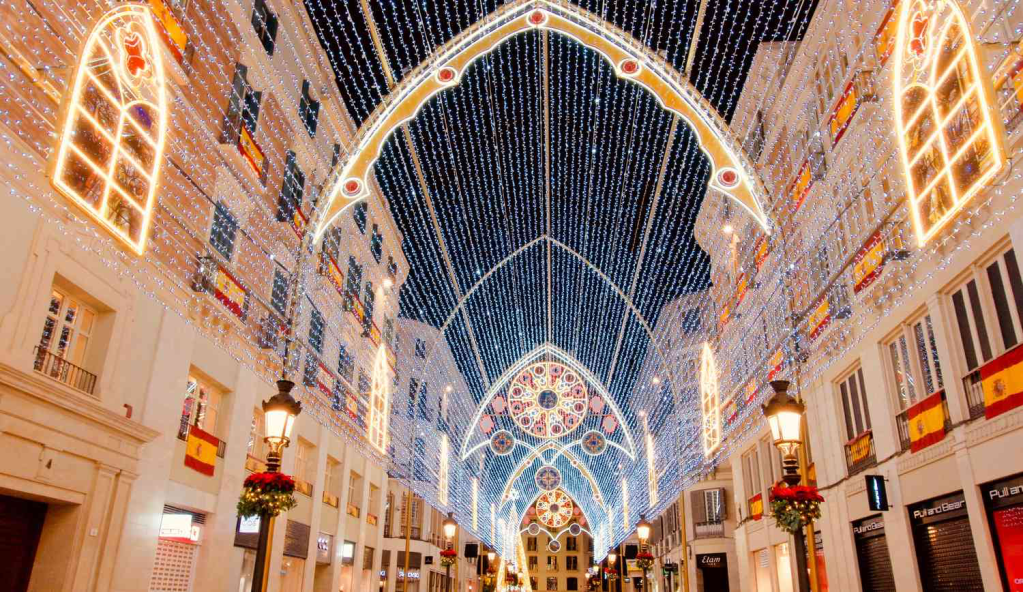
A lot of families eat their Christmas meals on Christmas Eve before La Misa Del Gato. The traditional dish for Christmas was “Pavo Trufado de Navidad”. This is a turkey stuffed with mushroom truffles or “Pularda asada” (a roasted young hen).
A popular dessert is “masapán” which is made of almonds, sugar, and eggs. Another popular dessert is “turrón” which is made of honey and toasted almonds. Delicious!
Italy
One of the most significant ways of celebrating Christmas in Italy is the Nativity set. A lot of Italian families have a Nativity scene in their home. Naples in Italy is world famous for its Nativity scenes. The scenes in Naples are known as “Presepe Napoletano” (meaning Neapolitan Nativity set.) Naples is also home to the largest Nativity scene in the world, which has over 600 objects in it! In 1982, Pope John Paul II, who was Polish, started the tradition of having a Christmas Tree displayed next to the Nativity Crib on St Peter’s Square in the Vatican. The crib scene at the Vatican has seventeen life size statues, nine of them date back to 1842.
On Christmas Eve, it’s common that no meat and also sometimes no dairy is eaten. Usually only a light seafood meal is eaten and the people go to the Midnight Mass service.
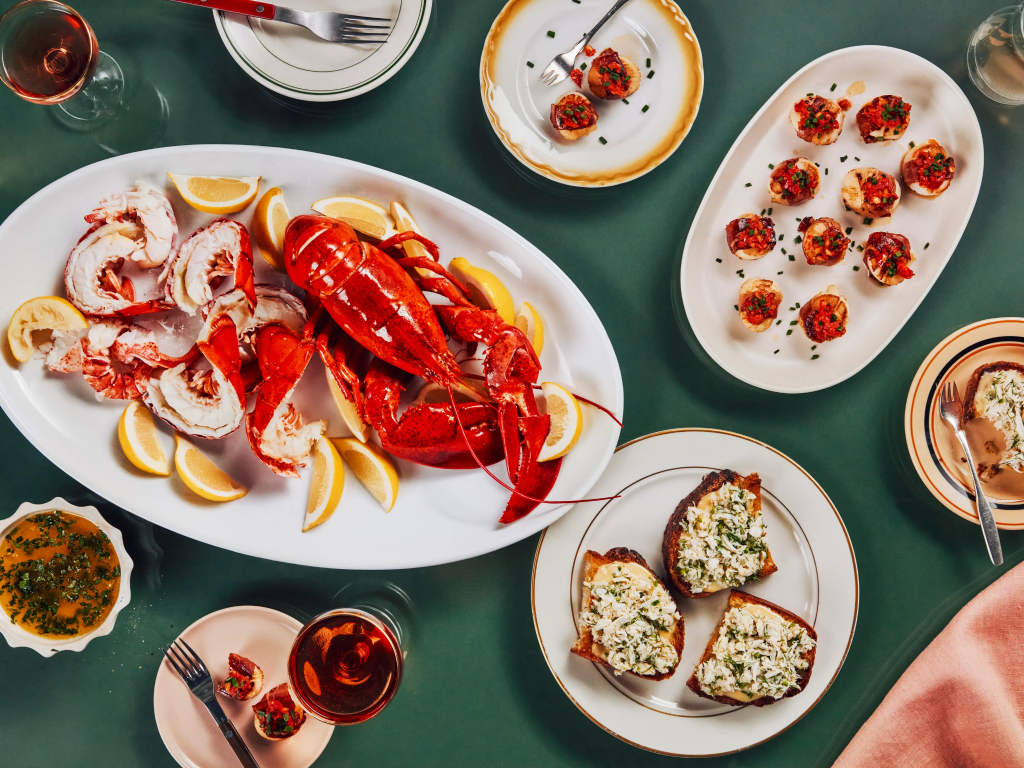
For many Italian-American families a big Christmas Eve meal of different fish dishes is now a very popular tradition! It’s known as The Feast of the Seven Fishes (‘Festa dei sette pesci’ in Italian). The feast seems to have its root in southern Italy and was brought over to the USA by Italian immigrants in the 1800s. In many ways this tradition is more popular in America than it is in Italy. Common types of fish eaten in the feast include baccala (salted Cod), clams, calamari, sardines, and eel.
Poland
In Poland, Advent is the beginning of Christmas Time. It’s a time when people are trying to be peaceful and remember the real reason for Christmas. Polish people try not to have excess of anything. Some people fast their favorite foods or drinks and parties are not widely held. A tradition within the Churches is the “roraty” which is a special mass or communion service held at dawn and is dedicated to Mary for receiving the good news from the angel Gabriel.

During Advent people do a deep clean to prepare their house for Christmas. They clean the rugs and the windows very thoroughly.
Christmas Eve is known as Wigilia (pronounced vee-GHEE-lee-uh). Traditionally, the house is also cleaned and everyone wears their best festive clothes. The main Christmas meal is eaten in the evening and is called “Kolacja wigilijna” (Christmas Eve supper).
Mexico
Las Posadas is a celebration that takes place in Mexico, but it is now celebrated in some areas of the United States. Las Posadas means The Inns – which is a place to stay the night. The celebration is a reenactment of the trip Mary and Joseph made to Bethlehem.
The celebration begins on December 16th and ends on December 24. December 24th is called Noche Buena. Every night in many small towns the children dress up as angels and carry statues of Mary and Joseph throughout the neighborhood. The group go to different houses and sing songs. The streets are lined with Luminaries which are bags filled with sand and a candle. The luminaries help guide the group. At every house, they ask the people for a place to stay the night but the neighbors respond by saying, “There is no place to stay.” This procession continues every night until the 24th. On the 24th one family says “yes, there is room” and the whole group comes into their home and they have a celebration.
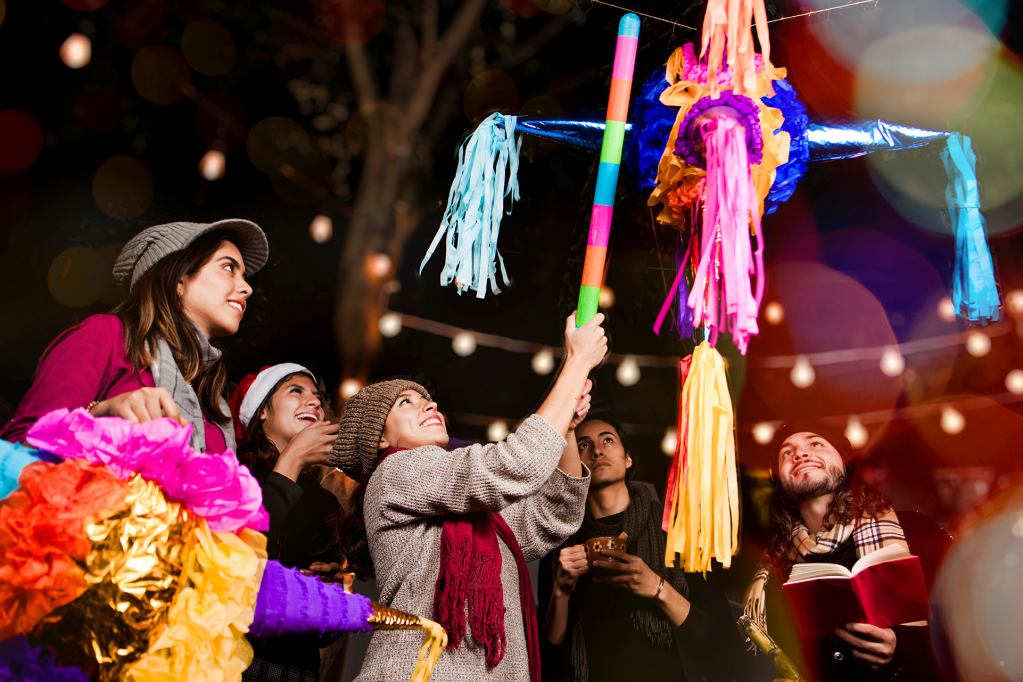
Traditionally, the celebration is for the children, so there is always a piñata. The piñata is in the shape of a star to represent the star that helped the wise Men find baby Jesus. The points on the star are called aginaldos. When they break the piñata, they use the aginaldos to scoop up the treats!
United Kingdom
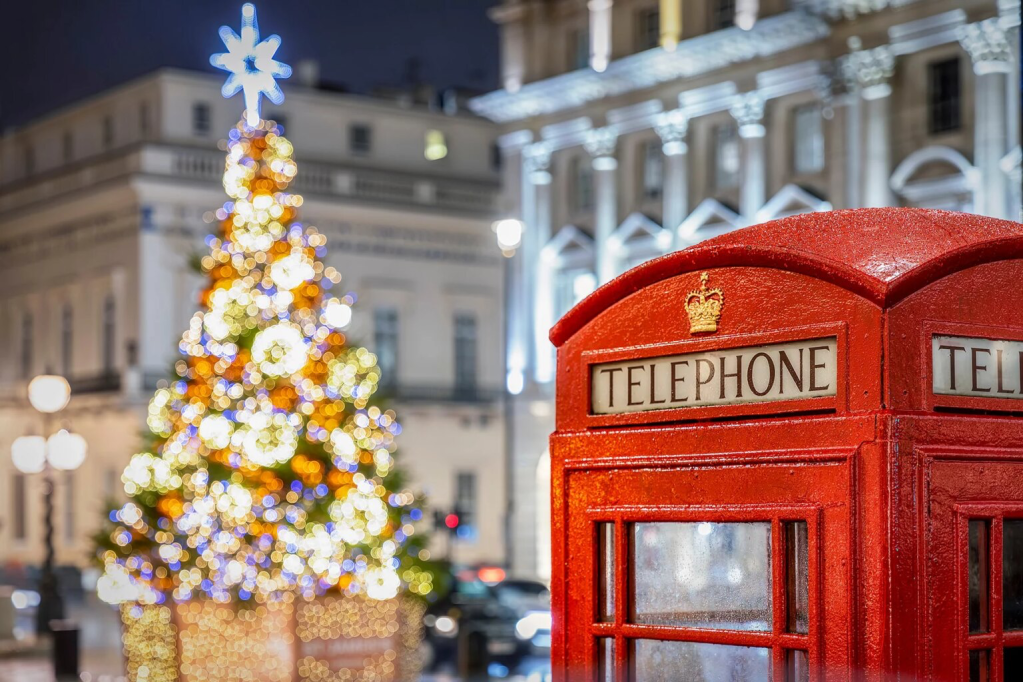
In the UK families often celebrate Christmas together so they can watch each other open their presents. Most families have a Christmas tree in their home for Christmas, a similar tradition to many households here in the United States. The decorating of the tree is usually a family occasion, with everyone helping. Holly, ivy, and mistletoe are also sometimes used to decorate homes or other buildings. Most towns and cities are decorated with Christmas lights over Christmas. Often a famous person “switches them on”. The most famous Christmas lights in the UK are in Oxford Street in London. Thousands of people go to watch the big “switch on” around the beginning of November.
Children believe that Father Christmas or Santa Claus leaves presents in stockings. These are normally hung up by the fire or by the children’s beds on Christmas Eve.
Children write letters to Father Christmas/Santa listing their requests, but sometimes instead of putting them in the post, the letters are tossed into the fireplace. The smoke carries the letters up the chimney and Father Christmas/Santa reads the smoke.
There are some customs that only take place or were started in the UK. Booking Day is a very old custom that started in the UK and is now taken as a holiday in many countries around the world.
Text Sources:
Image Credits:
 The Daily Seal
Leave a comment