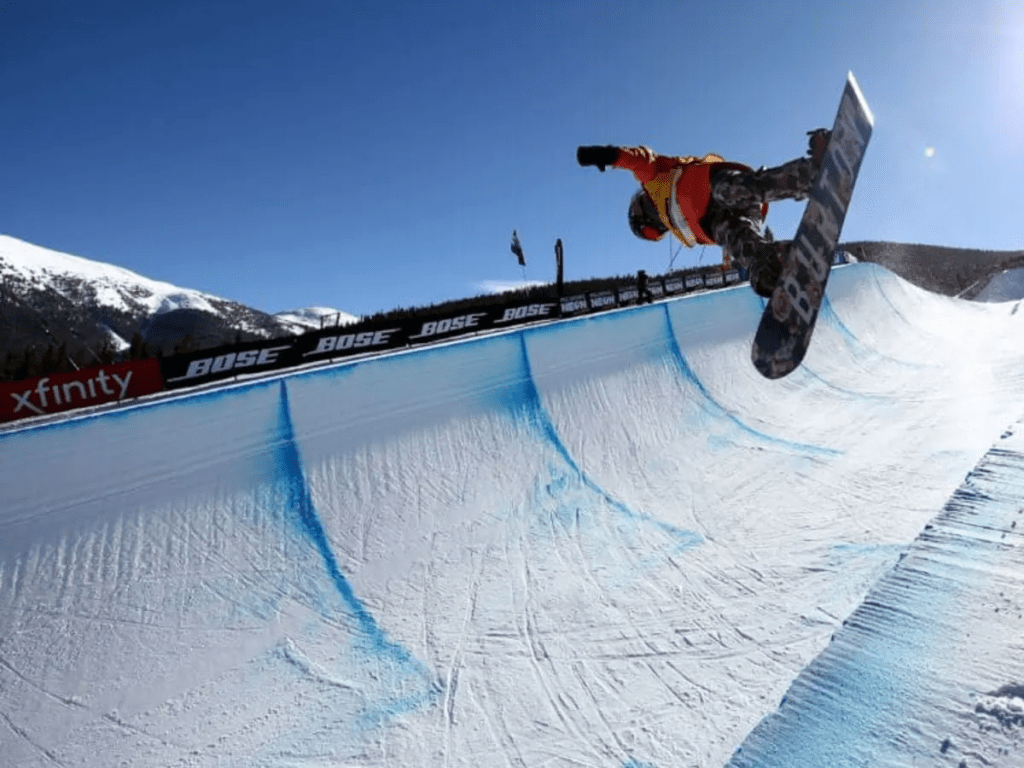
The Winter Olympics snowboarding half-pipe is one of the most exciting events in the winter olympics consisting of speed, skill, and creativity. The half-pipe was first introduced in 1988 at the Nagano Winter Olympics, helping bring snowboarding into the eyes of the world. Skiing was the more focused winter sport first introduced in 1936. Bringing snowboarding into the Olympics brought more attention to the sport and helped it gain popularity. The halfpipe event at this year’s 2026 Milan-Cortina, did not disappoint.
In the event participants ride into the U-shaped ramp made of snow, called a half pipe. Athletes build momentum by riding down the wall and launching high into the air, alternating the wall they go off after each jump. During their runs they perform a series of tricks, flips, and grabs. The judges score them based on difficulty, height, execution, and style. The snowboarders try to get in as many tricks as possible without falling, making each run a mix of precision and thrill. Each rider gets three runs to try and get the best score possible, after all three runs are up the highest score out of all the runs is the only one that will count. In the Olympics competitors compete in one qualifying round to get to the final round(medal round). The qualifying round determines the top 12 who move on to the final round. The final round is the same format as the first round, each rider gets 3 runs and the top one counts.
In the snowboarding halfpipe there are three medal spots, gold, silver, and bronze. The highest scorer in the medal round claims the gold medal, the second highest claims the silver medal, and the 3 best scores get the bronze medal.
For the medal round there were 2 medal winners from Japan: Yūto Totsuka who won gold and Ryusei Yamada who got bronze. Yūto Totsuka with a score of 95/100 had the highest out of the men’s and women’s halfpipe, Ryusei Yamada had a score of 92/100. The other medal winners were 1 from The United States Of America: Chloe Kim with a silver medal and a score of 88 holding first place until South Korea’s Gaon Choi received a score of 90.25 securing her spot for the gold medal. The last medal winner was Scotty James of Australia with an impressive score of 93.5 securing his spot for the silver medal. This Olympics snowboarding Olympics half-pipe was one of the most exciting in a long time, with many first time medalists receiving gold or silver medals, every Olympics many new tricks are invented/performed. This winter olympics gold medal winner for the men performed a triple cork 1440 to secure his score of 95 and stay in the gold medal spot. The winter olympics snowboarding half-pipe showcases fearless athletes who push the limits of what is possible on snow.
The Daily Seal: Saint Michael’s Newest Club on Campus Declan Earp, Daily Seal Student Writer
As the first quarter of the 25-26 school year comes to an end, the middle school clubs are in full swing. The Yearbook Club is working hard to produce a space-themed yearbook, and the Student Council is planning numerous events for the school year.
There is one totally new club on campus, too! The Newspaper Club, The Daily Seal has just formed, and it’s already off to a great start.
Mr. Cooney, the new 6-8 history teacher, was Public Relations Coordinator of the Newspaper Club at his alma mater, Salve Regina University. He wanted to bring that club to our community. “I heard that we had one in years past, but that we didn’t have one presently. I also myself had a great experience, learned a lot, and met a lot of friends through my newspaper club experience at Salve, and wanted to bring that to St. Michael’s students,” Cooney said in a recent interview.
Students are already working to produce top-notch articles ranging from local topics like “Gravy the Middletown Turkey” to global issues, and new scientific discoveries. One of Mr. Cooney’s goals when starting the club was to “excite people and prompt them into getting into writing, journalism, and politics in general,” and it’s clear that this is already happening.
The club is focused on helping students develop their voices while receiving feedback from teachers, not only to grow as writers, but also as people. So far, the club has been a huge success. All students are still welcome to join, so stop by if you feel inclined to do so. In the words of Mr. Cooney, “It’s a laid-back environment where you can enjoy your time, and really, it’s not supposed to be stressful, but a joyful learning opportunity.”
As a member of the club, I hope to write about events in our school community, such as this one, as well as articles related to my interests. The addition of this club to our community is certainly a positive one, as it will allow the entire student body to become more educated. I’m excited to see what the future holds for The Daily Seal and how it impacts the larger school community.
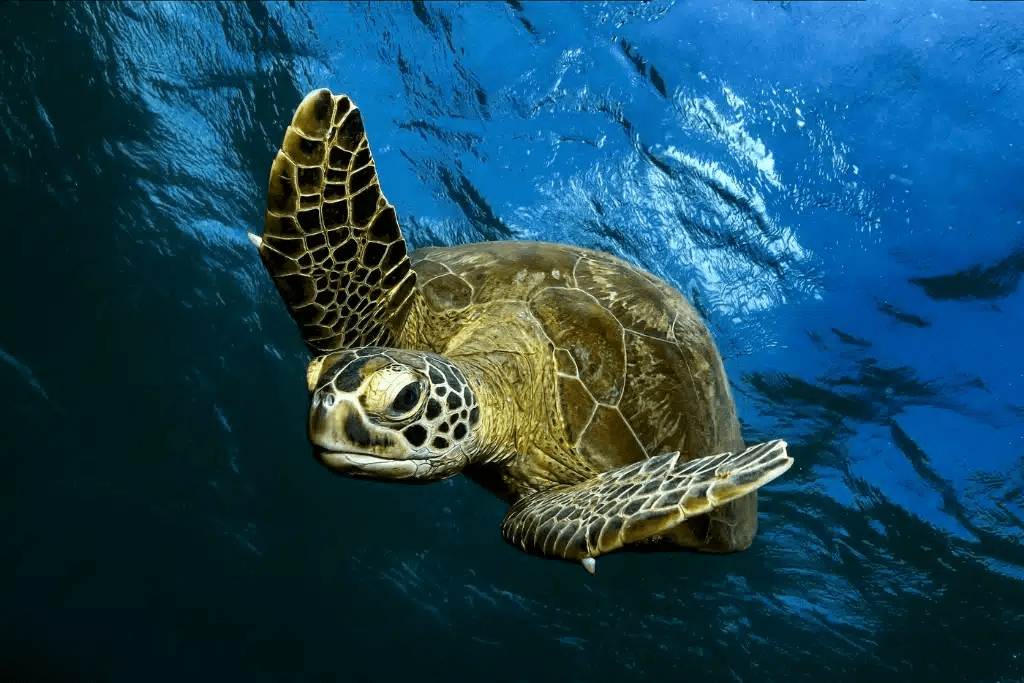
We hear a lot about what’s going wrong in the world, especially lately. We don’t, however, hear enough about what’s going right. Usually, the good stuff doesn’t make the headlines, but that doesn’t mean that good things aren’t happening! For example, did you know that the green sea turtle has officially been moved from endangered to “least concern”? This goes to show that human action works when we commit to protecting something; we can actually reverse damage, not just slow it.
On a similar note, NASA actually confirmed that the ozone layer is healing, with expected recovery to take place within this century. This means that the Earth is starting to repair itself slowly because of global cooperation.
On top of this good news, a Gallup survey found that in 2025, only about 54% of U.S. adults say they drink alcohol, the lowest level since the survey began in 1939. Here’s another fact that may give you hope for our world…. It’s a small example, but little things like this show the bigger picture: The Hudson River, once extremely polluted, is now seeing wildlife return—bald eagles, snapping turtles, beavers, and black bears. This proves that when humans work together, nature really can ‘bounce back.’ From industrial dump-zone to wildlife heaven: proof of what happens when we treat our natural world right. Programs like Kids for Peace are partnering with fitness to promote kindness among youth! One of my favorite positive things happening in the U.S right now is how teens are leading coral restoration dives in Florida and rebuilding reefs with their own hands! Examples like this show just how much good is happening around us, so always remember, whenever it seems like only scary and bad things are happening, there are always good things happening too! So keep looking on the bright side!
There are many different countries in the world, and many that celebrate the Christmas holiday. The United States of America, France, Spain, and Mexico just to name a few. There are five particular countries that will be talked about in this article. They are Spain, Italy, Poland, Mexico, and the United Kingdom. These countries are being mentioned because they have a high visitor rate as of 2025 according to World Population Review.
Spain
In Spain people go to a midnight mass or “La Misa Del Gato” (The mass of the rooster). It is called the mass of the rooster because it is believed that roosters surrounded Jesus on the day of his birth. In the days before Nochabuena (Christmas Eve), children can take part in “piden el aguinaldo.” In “piden el aguinaldo” they go around to neighbor’s homes and sing Christmas carols hoping to get some money and spread holiday cheer.
A lot of families eat their Christmas meals on Christmas Eve before La Misa Del Gato. The traditional dish for Christmas was “Pavo Trufado de Navidad”. This is a turkey stuffed with mushroom truffles or “Pularda asada” (a roasted young hen).
A popular dessert is “masapán” which is made of almonds, sugar, and eggs. Another popular dessert is “turrón” which is made of honey and toasted almonds. Delicious!
Italy
One of the most significant ways of celebrating Christmas in Italy is the Nativity set. A lot of Italian families have a Nativity scene in their home. Naples in Italy is world famous for its Nativity scenes. The scenes in Naples are known as “Presepe Napoletano” (meaning Neapolitan Nativity set.) Naples is also home to the largest Nativity scene in the world, which has over 600 objects in it! In 1982, Pope John Paul II, who was Polish, started the tradition of having a Christmas Tree displayed next to the Nativity Crib on St Peter’s Square in the Vatican. The crib scene at the Vatican has seventeen life size statues, nine of them date back to 1842.
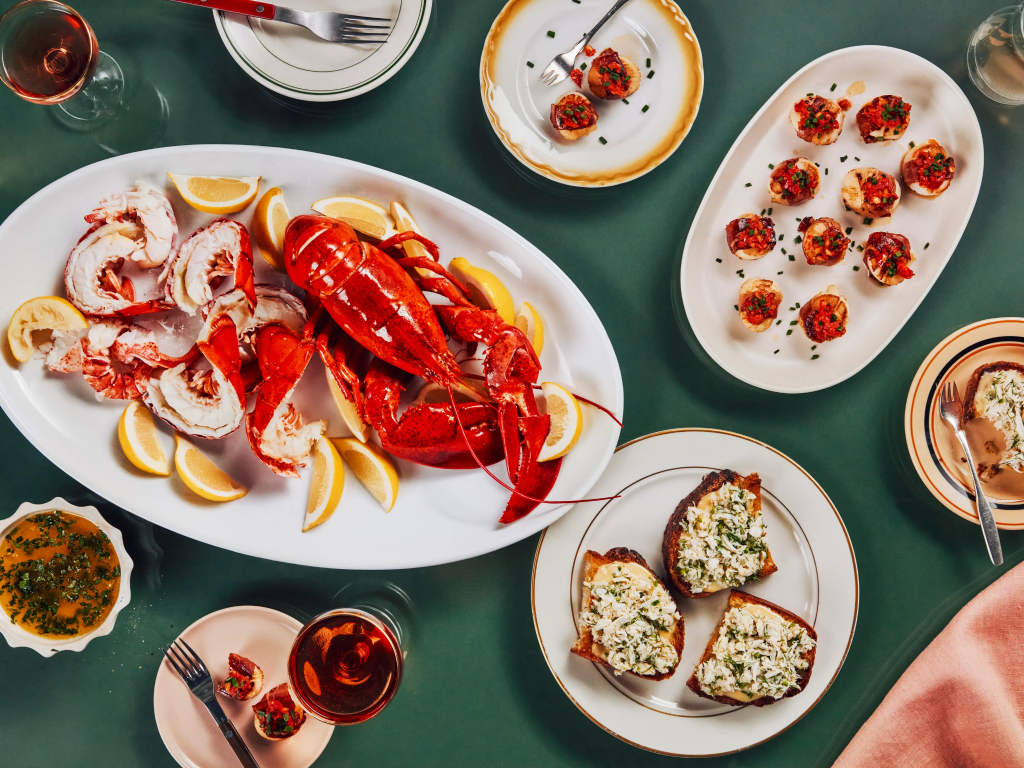
On Christmas Eve, it’s common that no meat and also sometimes no dairy is eaten. Usually only a light seafood meal is eaten and the people go to the Midnight Mass service.
For many Italian-American families a big Christmas Eve meal of different fish dishes is now a very popular tradition! It’s known as The Feast of the Seven Fishes (‘Festa dei sette pesci’ in Italian). The feast seems to have its root in southern Italy and was brought over to the USA by Italian immigrants in the 1800s. In many ways this tradition is more popular in America than it is in Italy. Common types of fish eaten in the feast include baccala (salted Cod), clams, calamari, sardines, and eel.
Poland
In Poland, Advent is the beginning of Christmas Time. It’s a time when people are trying to be peaceful and remember the real reason for Christmas. Polish people try not to have excess of anything. Some people fast their favorite foods or drinks and parties are not widely held. A tradition within the Churches is the “roraty” which is a special mass or communion service held at dawn and is dedicated to Mary for receiving the good news from the angel Gabriel.
During Advent people do a deep clean to prepare their house for Christmas. They clean the rugs and the windows very thoroughly.
Christmas Eve is known as Wigilia (pronounced vee-GHEE-lee-uh). Traditionally, the house is also cleaned and everyone wears their best festive clothes. The main Christmas meal is eaten in the evening and is called “Kolacja wigilijna” (Christmas Eve supper).
Mexico
Las Posadas is a celebration that takes place in Mexico, but it is now celebrated in some areas of the United States. Las Posadas means The Inns – which is a place to stay the night. The celebration is a reenactment of the trip Mary and Joseph made to Bethlehem.
The celebration begins on December 16th and ends on December 24. December 24th is called Noche Buena. Every night in many small towns the children dress up as angels and carry statues of Mary and Joseph throughout the neighborhood. The group go to different houses and sing songs. The streets are lined with Luminaries which are bags filled with sand and a candle. The luminaries help guide the group. At every house, they ask the people for a place to stay the night but the neighbors respond by saying, “There is no place to stay.” This procession continues every night until the 24th. On the 24th one family says “yes, there is room” and the whole group comes into their home and they have a celebration.
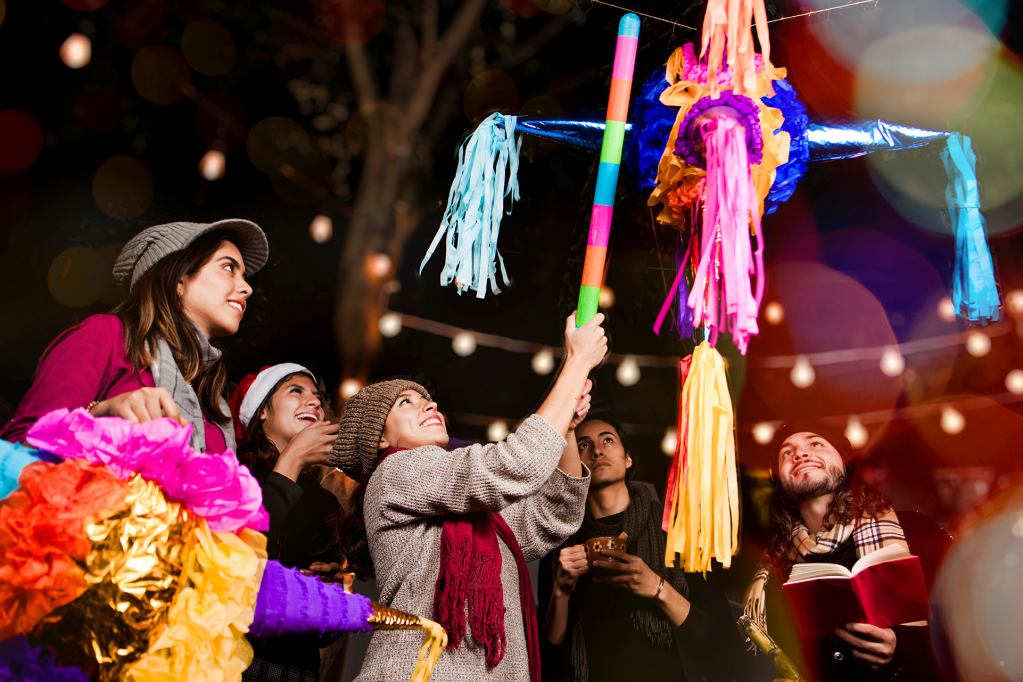
Traditionally, the celebration is for the children, so there is always a piñata. The piñata is in the shape of a star to represent the star that helped the wise Men find baby Jesus. The points on the star are called aginaldos. When they break the piñata, they use the aginaldos to scoop up the treats!
United Kingdom
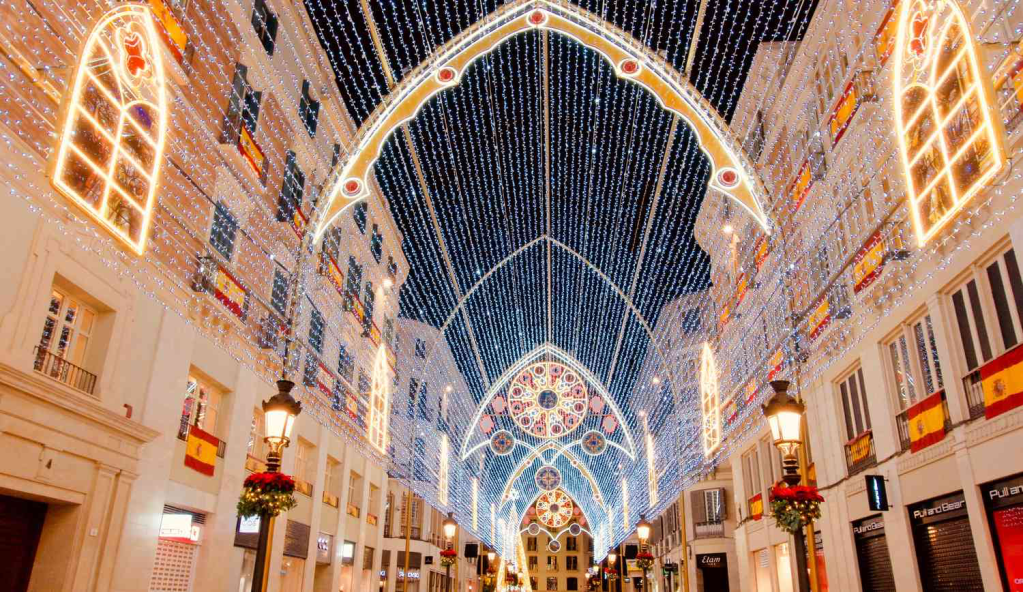
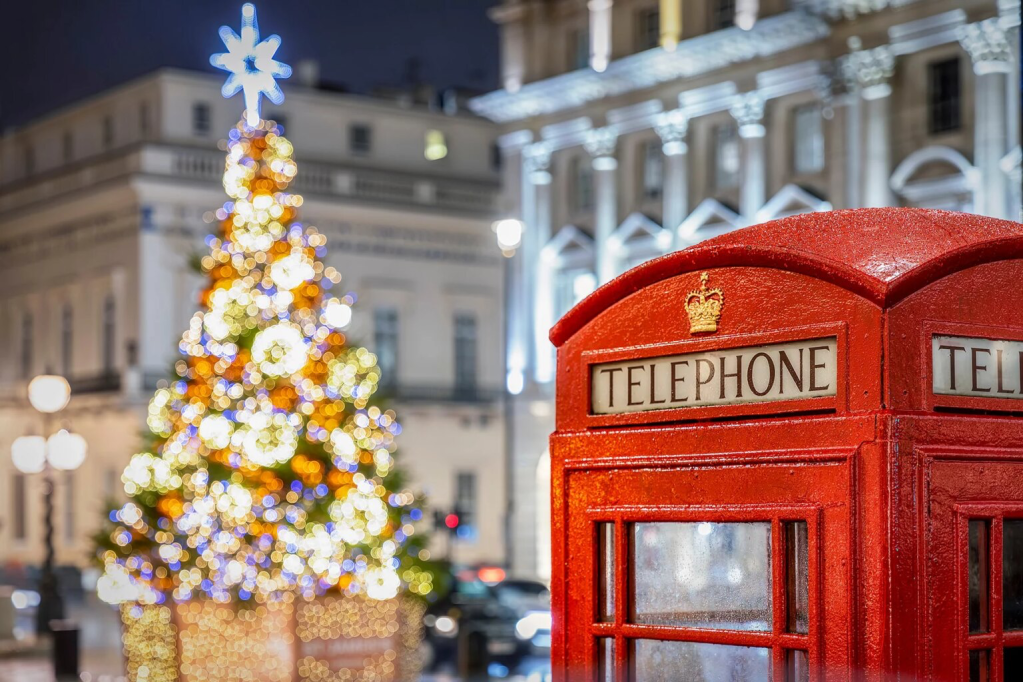
In the UK families often celebrate Christmas together so they can watch each other open their presents. Most families have a Christmas tree in their home for Christmas, a similar tradition to many households here in the United States. The decorating of the tree is usually a family occasion, with everyone helping. Holly, ivy, and mistletoe are also sometimes used to decorate homes or other buildings. Most towns and cities are decorated with Christmas lights over Christmas. Often a famous person “switches them on”. The most famous Christmas lights in the UK are in Oxford Street in London. Thousands of people go to watch the big “switch on” around the beginning of November.
Children believe that Father Christmas or Santa Claus leaves presents in stockings. These are normally hung up by the fire or by the children’s beds on Christmas Eve.
Children write letters to Father Christmas/Santa listing their requests, but sometimes instead of putting them in the post, the letters are tossed into the fireplace. The smoke carries the letters up the chimney and Father Christmas/Santa reads the smoke.
There are some customs that only take place or were started in the UK. Booking Day is a very old custom that started in the UK and is now taken as a holiday in many countries around the world.
Young Protestors & How They Changed The World: Greta Thunberg
and Her Reach for Climate Justice
Morgan Rossell, Daily Seal Student Writer
For as long as we can remember, protests and marches have been a promoter of change and a representation of the young voices of America. Whether it be the recent nationwide No Kings March against the Trump administration or peaceful protests dating back to the suffrage era, many of the most famous protests have been led by young people. Around the world this same demographic continues to change, and in this article, and this Daily Seal column, I’m going to tell you about some famous ones, maybe to inspire our next leaders.
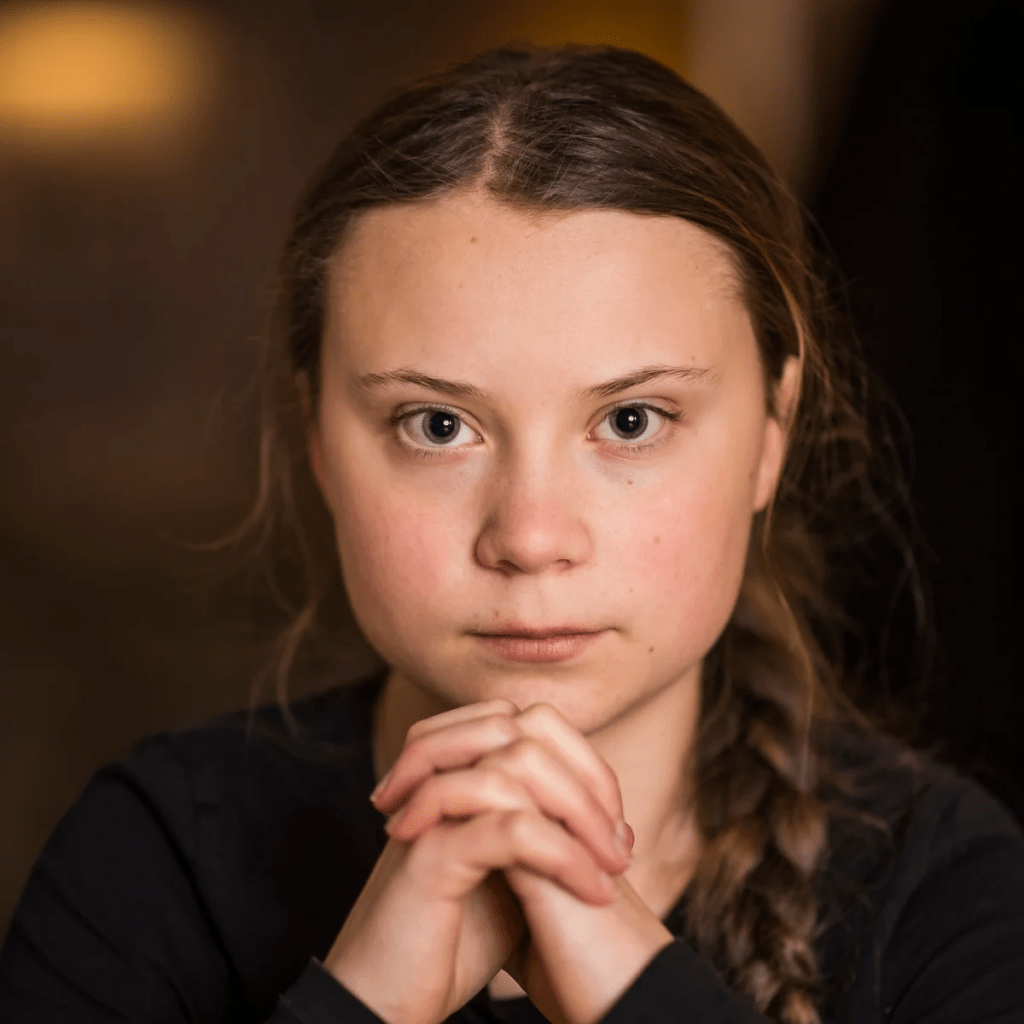
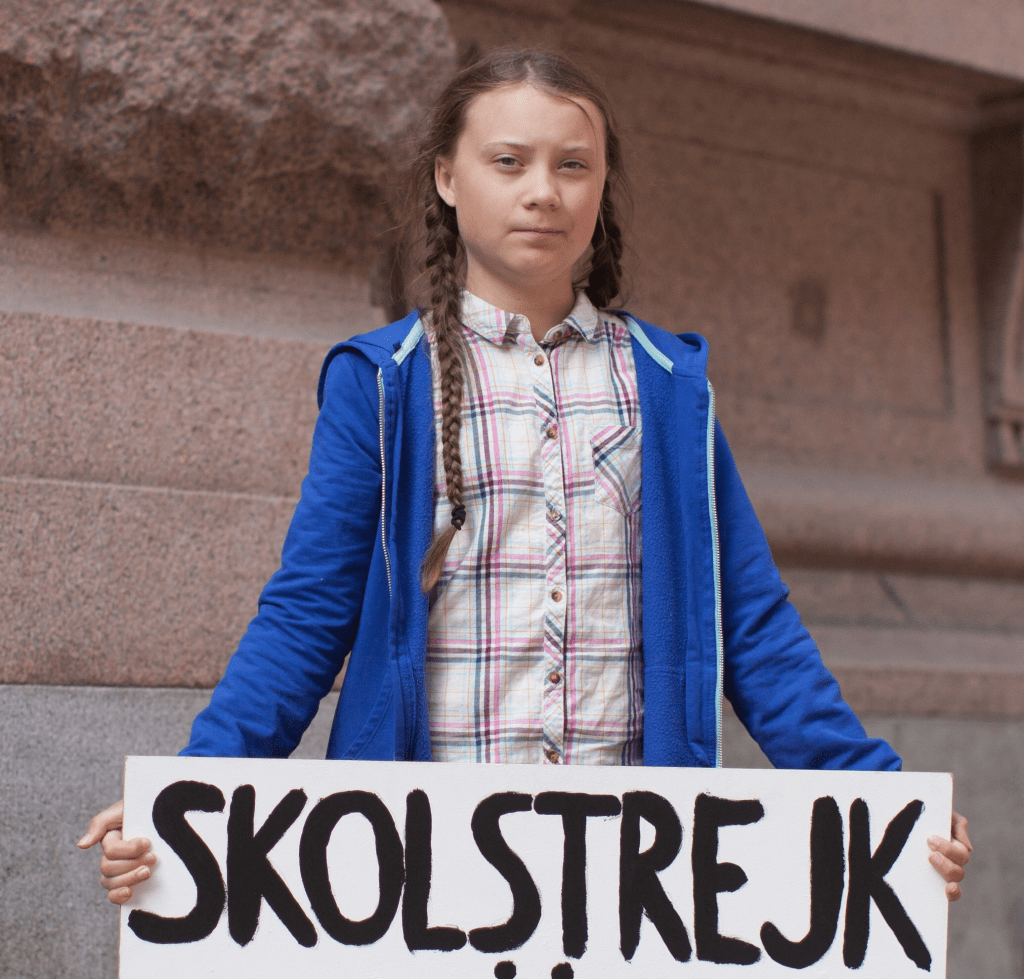
One of the most famous young activists for the justification of climate change is Greta Thunberg, a 22-year-old from Stockholm, Sweden. Since she was young, Thunberg has had a strong sense of justice for what was right and wrong, especially when it comes to climate change. When she was only in the ninth grade, Thunberg had started a global movement which she called “Global Climate Strikes”. At 15, she had gone on strike in front of the Swedish parliament building, starting the tipping point of a radical climate change movement.
During this time, it was estimated that over 163 countries participated in the Global Climate Strikes, with millions more people by Greta’s side. These Strikes were dubbed the “Largest Climate Change Protest to date”, which is a truly incredible feat.
And, even to this day, Ms. Greta Thunberg is still hugely into climate and social activism, a demonstration of her continued dedication to her cause.
If you like climate change activism like Greta Thunberg, then I have the book for you! The First Rule of Climate Club, written by Carrie Firestone, highlights the importance of the climate -of our world- changing, and additionally talks about racial injustice in a small town.




 The Daily Seal